


Tonewood Buying Guide
Every piece of tonewood is unique.
This guide explains the details that influence how an instrument will sound, feel, and respond, helping you choose the wood that best fits your project.
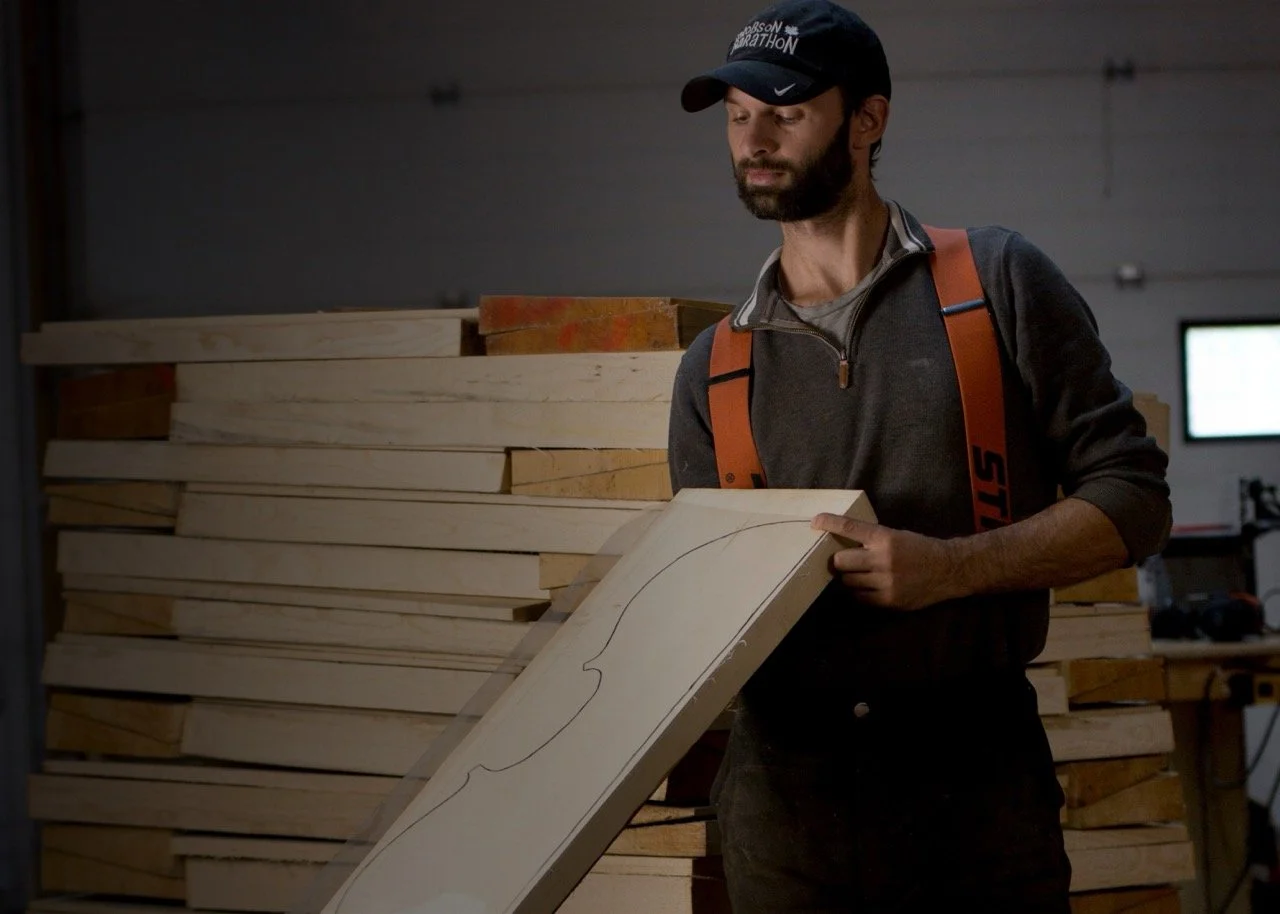
Our grading system is based primarily on the appearance of the working surface. Grade reflects visual characteristics such as grain consistency, colour variation, figure, and defects. It does not necessarily indicate tonal quality.
Grades
-
Near perfect top. Even and straight grain. No runout. Generally white in colour. Tops by log number are available.
-
Knots and knot shadow are not allowed within the pattern area. Grain is straight and even or graduated. Minimal to no runout. Generally white in colour. Tops by log number are available.
-
Knots and knot shadow fall outside the pattern area. Grain may be uneven, wavy, or curved. Slight colour variation allowed. Slight runout allowed. Tops by log number are available.
-
Knots and knot shadow fall within the pattern area. Brown and orange colour allowed. Specific log numbers cannot be requested.
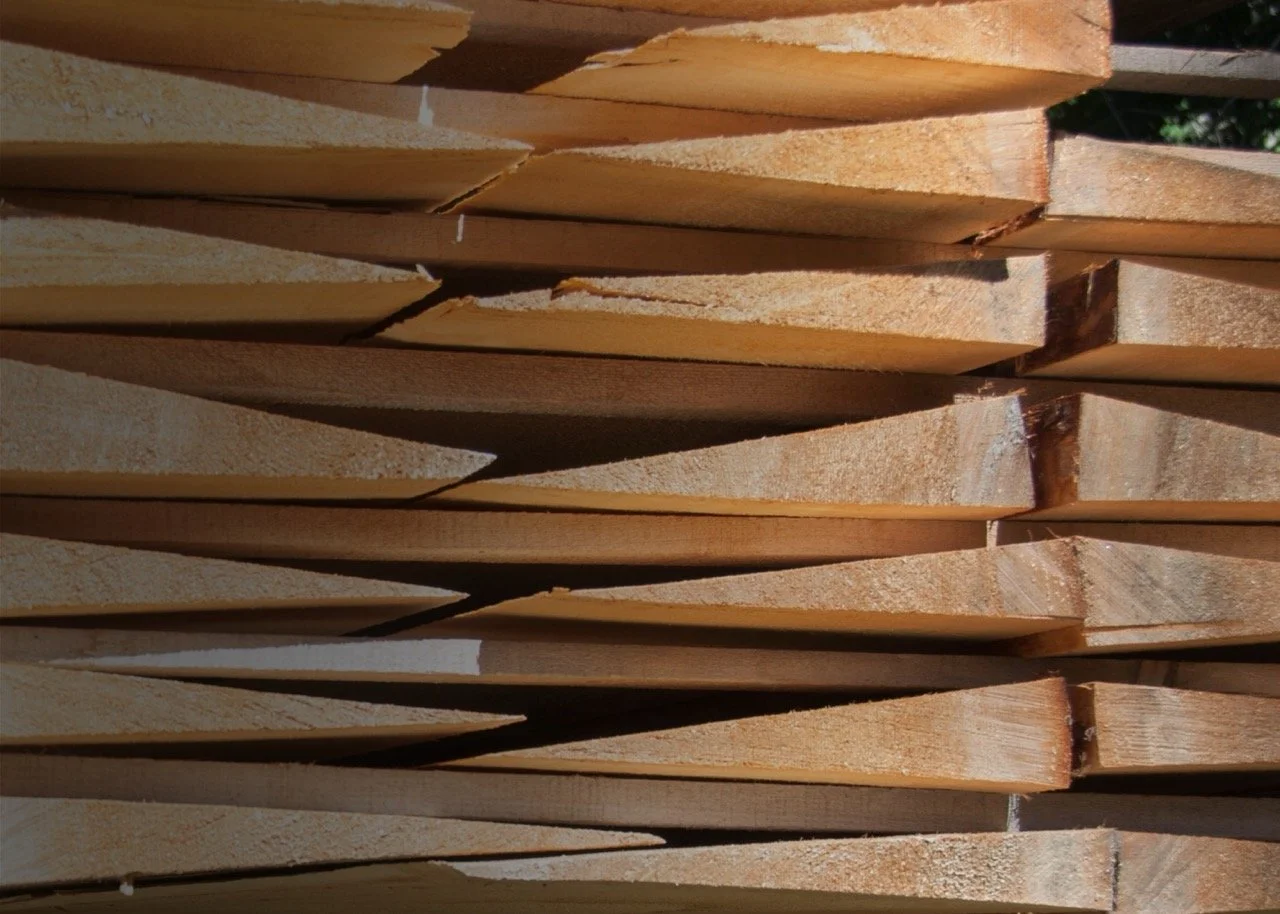
Specific gravity is a measure of wood density compared to water. It can be an indicator of stiffness to mass ratio.
We find that many luthiers like to choose their tonewood based on density. We track and measure every log we process to help our customers find the piece they are looking for. Use our Log Database to search for your perfect density.
Have a piece of your own that you would like to measure? Use our tonewood density calculator.
Understanding Specific Gravity (SG)
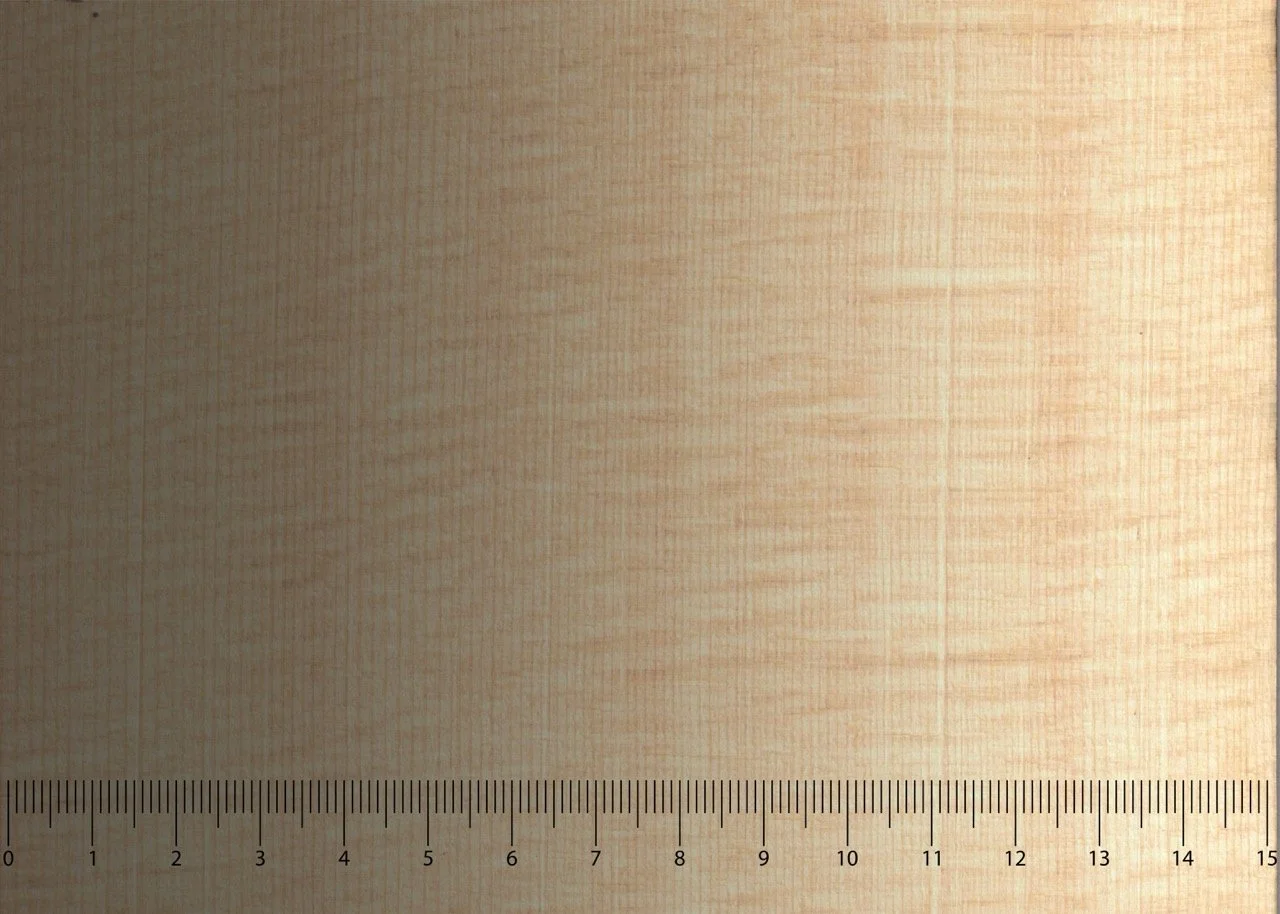
Grain Per Inch (GPI) measures the spacing of annual growth rings. Fine grain and wide grain can both produce excellent instruments, and preference often varies by maker, instrument type, and project goals.
Use our Log Database to see the full range of GPI available. You can also see sample images for a visual comparison.
Grain Spacing (GPI)

Every piece of wood is assigned a log number that links it back to the tree it came from. This allows makers to reorder from the same tree, compare pieces from a known source, and maintain consistency across multiple instruments.
Once a log inventory runs out we can trace specific characteristics such as age, GPI and SG to find comparable logs.
Why Log Numbers Matter

Harvest year indicates how long a piece has been seasoning. Many makers prefer wood that has been air-dried for several years before use, while others seek significantly older material. Harvest year is included whenever known so customers can choose wood that matches their preferences.
Many of our logs are harvested standing dead. This means the tree died naturally in the forest without falling to the ground. This allows for air drying before it even gets to our yard for processing and is generally ready for use right away.
All billets are waxed dipped (flat top guitars excluded) to help prevent checking and cracking while air drying.
Harvest Year
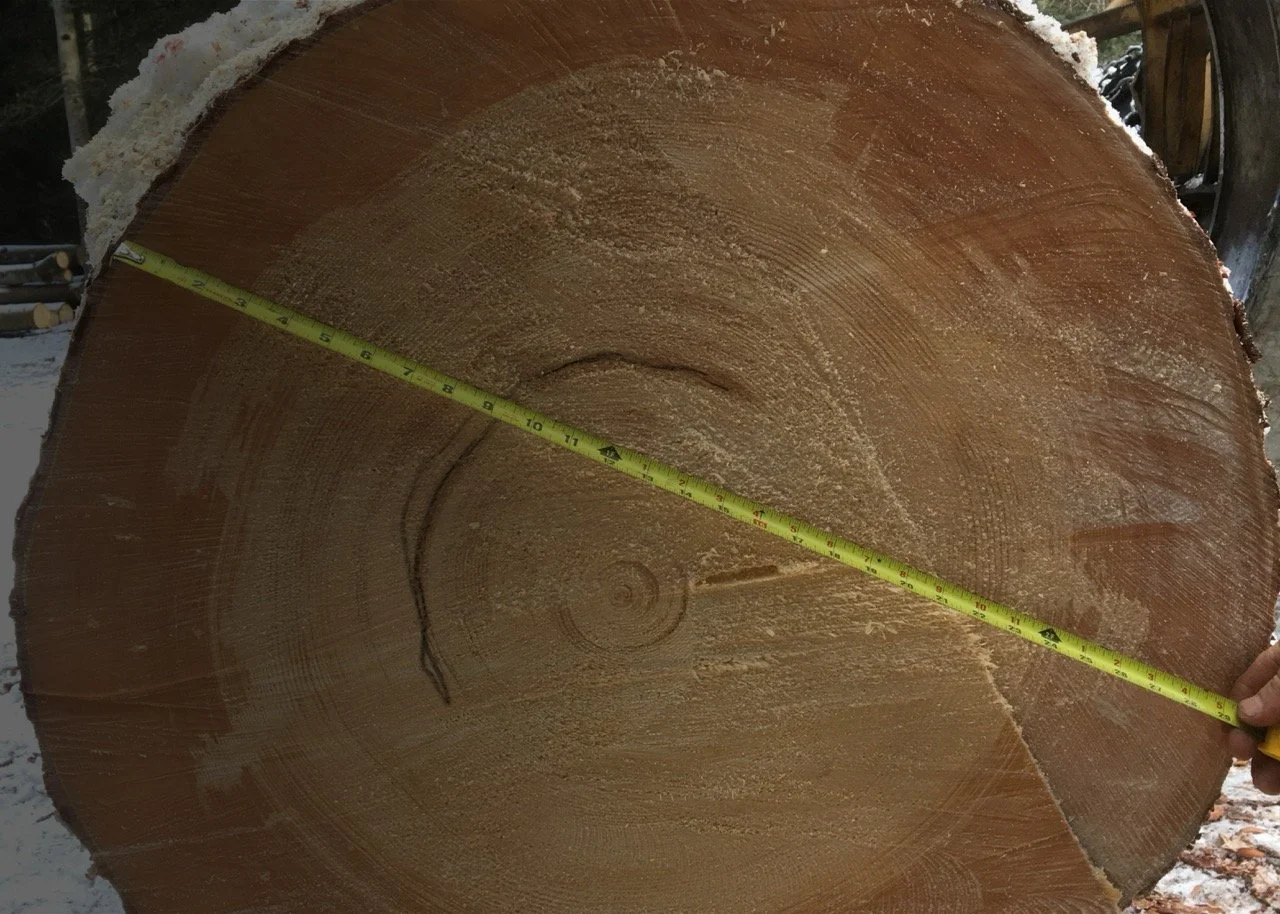
We offer many different sizes of tonewood. Use the shop filters to narrow down your search for the size you need.
Each product listing includes either a size chart for the minimum dimensions for the instrument size you select, or actual dimensions of the piece for individually listed billets.
Instrument Size Chart
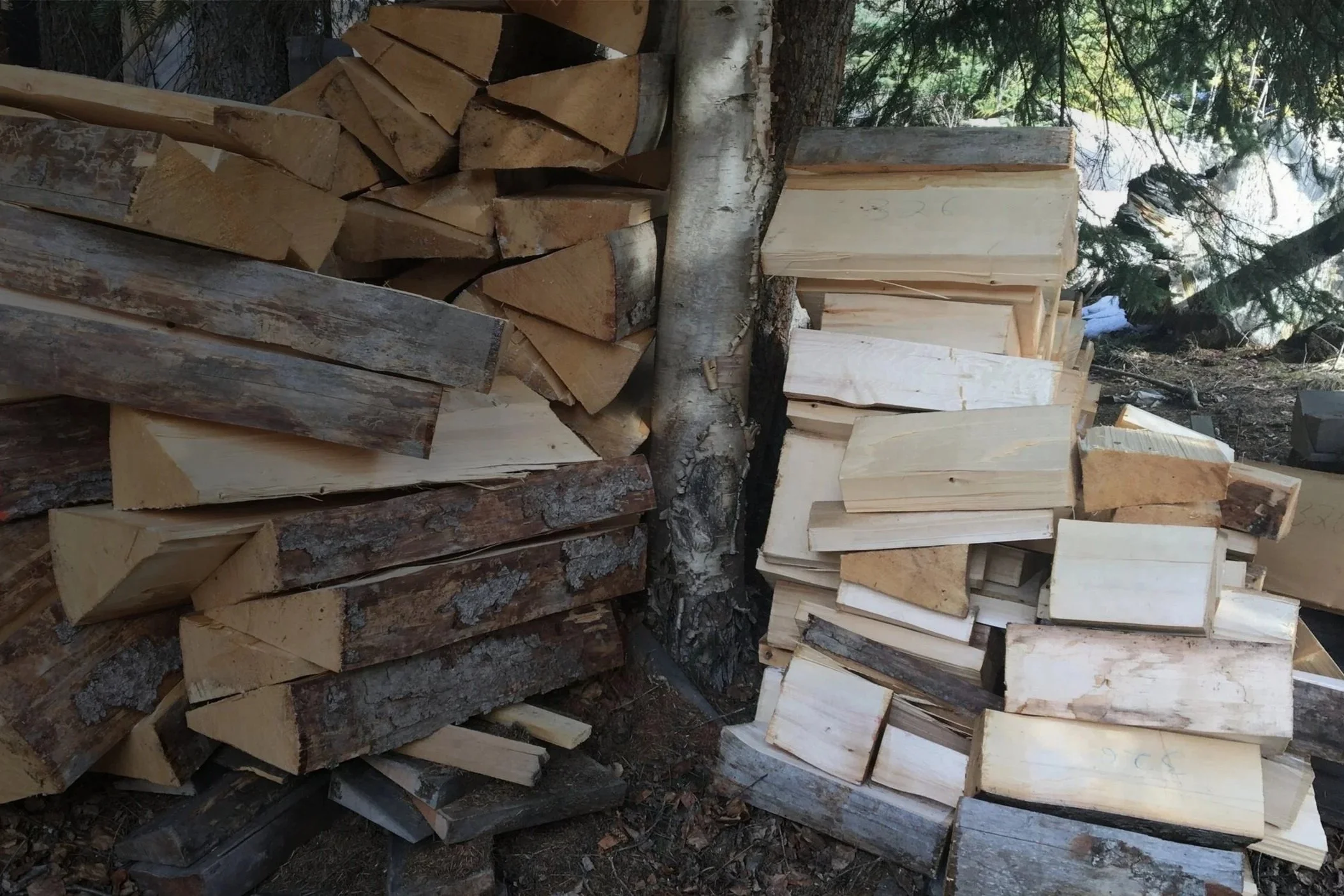
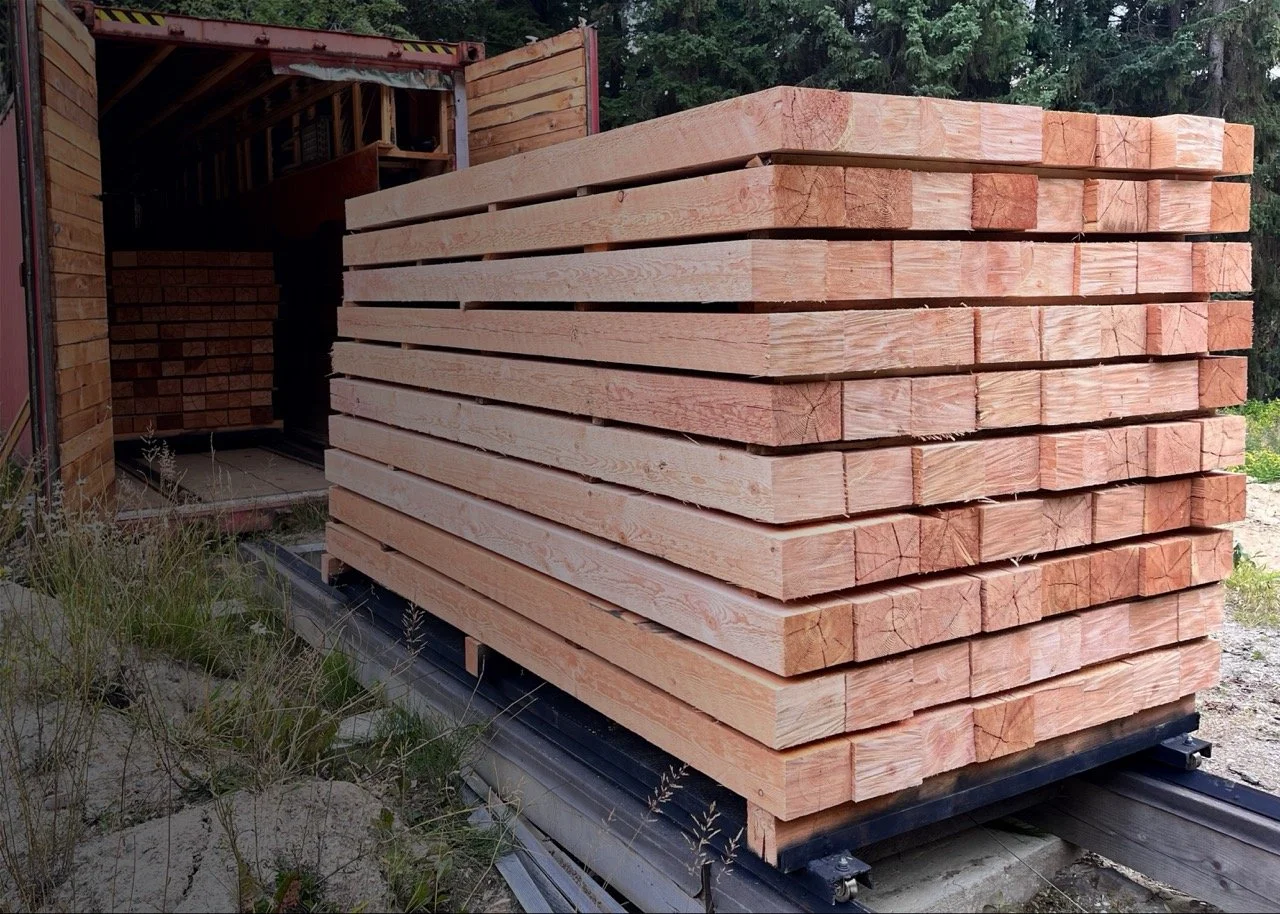
We air dry our tonewood outdoors for several years, allowing it to season slowly and naturally. Once processed to final dimensions, most pieces are wax dipped to slow moisture loss and reduce the risk of cracking. (Flat-top soundboards are not wax dipped, as their thin dimensions are less susceptible to drying stress.)
During periods of high humidity or after significant rainfall, wood is brought indoors for 2–7 days before shipping to help stabilize moisture content and reduce the risk of checking during transit.
We recommend acclimating your tonewood in the workshop for 1–2 months before construction. This allows it to adjust to its new environment and promotes maximum stability during the building process.
Acclimation & Drying
We ship our tonewood worldwide. All shipping charges are collected at checkout.
Is your country not available at checkout? Contact us and we can quote any charges to your destination.
All customs and duties fees are the responsibility of the customer. Where applicable, pre-paid customs and duties fees are collected at checkout. If we happen to collect too much, we will credit the difference to your payment method.
Shipping & Duties
Still have questions?
Send us an email for answers to other questions about ordering, wood properties, and more.